Building Under Fire: Finding Strength in God During Seasons of Opposition (Nehemiah 4)
Meeting Report: Community Quiet Time — Building Under Fire (Nehemiah 4)
Meeting Overview
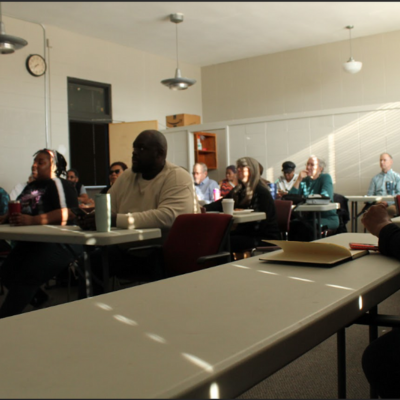
Our community QT was convened to provide a space for spiritual fortification and encouragement during seasons of significant trial(s). Our primary goal was to discover how to find strength in God when external pressures and internal fatigue threaten to halt our progress, emphasizing that the support of a “Trumpet Network” within our community is vital for long-term endurance.
During our session, we conducted an in-depth study of Nehemiah 4 to understand the mechanics of handling both outside attacks and the more subtle impact on our courage. We explored the reality that any “Sacred Work” commissioned by God; be it a career, a relationship, or a ministry; will inevitably face resistance. We learned that while the enemy seeks to stop the work through fear and exhaustion, we can overcome by organizing our lives around prayer, community support, and a re-centered vision of God’s greatness.
Key Topics & Main Ideas
Understanding the nature of the “wall” we are building helps us recognize the profound value of our daily efforts. Whether we are rebuilding a broken home or pursuing a vocational goal, we are not merely laboring; we are engaged in a divine assignment that reflects God’s glory.
Sacred Work and Resistance
We evaluated the transformative idea that “Work is Worship.” In our study, we noted that the Hebrew word for work appears six times. This is the same word used to describe the construction of the Tabernacle in Exodus 36 and God’s own creative work in Genesis 2:2. Because this work is a holy vocation, it naturally attracts opposition.
As the facilitator noted, the mere fact of building is a provocation; when “the wall” begins to rise, it triggers a burning anger in those who oppose God’s transformation.
The Phases of Opposition
We described six distinct, escalating weapons used by the enemy to stop the work. These tactics move through the following phases:
- Phase 1: Mockery: An attack on identity (“Feeble Jews”) designed to make the builders feel inadequate. This can manifest as self-mockery—voice in our mind mocking the transformation in our lives.
- Phase 2: Conspiracy: A “Coalition of Confusion” aimed at disorienting the builders and breeding fear.
- Phase 3: Internal Collapse: The most lethal phase, where the enemy’s words get into the mind, causing a triple crisis of failing strength, crushing rubble, and shattered confidence. Have you ever repeated what the enemy has been suggesting to you? You have been a disciple for a long time, and you have nothing to show for it. Do not buy his lure and lies.
- Phase 4: Rumor Warfare: Terror deployed as a precision instrument, with warnings arriving “ten times” from all directions to make the builders feel surveilled.
- Phase 5: Exploiting Isolation: Utilizing the “long wall” to keep builders spread far apart. Isolation is the structural vulnerability that the assault exploits. The voices that powerfully discourage us to stay away from other disciples and meeting together.
- Phase 6: Sustained Exhaustion: The decisive, often invisible weapon where constant pressure makes rest impossible. Fatigue halts the work more effectively than a direct attack.
The Most Dangerous Voice
We analyzed the shift from the “External Voice” of critics like Sanballat to the far more lethal “Internal Voice.” While the builders initially managed external contempt by simply continuing their work, the situation became critical when the voice of Judah (God’s own people) turned inward. When the builders began saying, “The strength is failing” and “The rubble is too much,” they experienced an internal collapse. In this stage, the builders echo the enemy’s assault and become their own opposition, having forgotten the voice of God.
The Strategy of Nehemiah’s Counter-Offensive
To break spiritual paralysis, Nehemiah implemented a five-part strategy that we must adopt:
- Prayer: The first move is Intercession, bringing the enemy's contempt to God as a legal complaint.
- Keep Building: Recognizing that the best answer to mockery is visible construction. We do not debate; we build, we continue the build.
- Prayer + Guard: Addressing heaven while organizing on earth. Prayer without guarding is presumption; guarding without prayer is self-sufficiency.
- Reorganize by Family: Replacing isolation with connectivity and a “trumpet network” for mutual aid.
- Re-centering: Prioritizing a vision of a “great and awesome” God over the enemy’s strategy. A bigger God produces braver builders.
Who Said What
The diverse perspectives of our community members provided a modern-day “Trumpet Network,” echoing the call in Galatians 6:2 to bear one another’s burdens. This network ends the structural vulnerability of isolation by providing mutual aid.
Audio Speakers
- The Facilitator: Opened with a warm prayer for those arriving with “full calendars but empty courage.” He identified our modern “rubble” as specific hardships: children who left the church, the loss of loved ones, sickness, job loss, and economic hardship. He reminded us that “building under fire” is our current reality.
- Dolores: Provided the foundation by reading the full text of Nehemiah 4. Her reading grounded the session, helping us visualize the shift from physical labor to the spiritual battle of the heart.
- Kunle: Connected Nehemiah’s struggle to the Armor of God (Ephesians 6). He linked the enemy’s tactics to the serpent in the Garden of Eden, noting how the enemy “throws doubt” to make God-given tasks look “scary” and impossible to finish.
- Njideka: Warned about the danger of negative comments made in front of others. She noted that such comments “poison the mind” and transfer negativity to the hearers, creating collective opposition and discouragement.
- Frank: Moved to a new neighborhood with a ministry vision; experienced two months of severe unexplained illness and insomnia; prayed through it without medication, symptoms resolved, and a Bible talk with 4–6 consistent studiers is now thriving.
- Bill: Growth in maturity taught him that character is built in struggle, not ease; now specifically invoking the Holy Spirit in prayer for specific challenges.
Chat Participants
The chat reflected a shared sense of “vulnerability.” Members expressed a common need to “refresh” and find rest, acknowledging that the weight of daily life makes them want to drop their tools. This vulnerability highlighted the necessity of the “trumpet” call—if we are separated on the wall, we must rally together.
Key Takeaways & Action Steps
The true value of our session is found in how we choose to “pick up our tools” differently. We are committed to shifting our focus from the “rubble” to God’s power through these specific decisions:
- I will pray before I plan: Prioritizing intercession before attempting human strategy.
- I will guard while I build: Staying alert to discouragement while remaining busy with the work.
- I will not carry this wall alone: I will rally to the “trumpet” of community and use the network of fellow builders for help.
- When strength runs out, I will remember the Lord: Intentionally shifting focus to the “great and awesome” God when the mess feels overwhelming.
- I will clothe myself with God’s full armor until the work is done: Maintaining my spiritual posture and identity in Christ.
Keep going, builders. Do not let the opposition convince you the work is not worth doing. “Our God is fighting for us.” (Nehemiah 4:20).
Action Items
- All participants: Consider documenting a personal journal of God's great deeds in life and family as a guard against spiritual amnesia.
- All participants: Review which of the six phases of opposition (mockery → coalition → internal doubt → rumor → fatigue → stoppage) currently applies to something you are building for God and take it to God.
- Do not let our hardships take us away from God.
Visit our website: www.icommclassroom.org
Visit our YouTube channel: @icomm.CLASSROOM
Weekly Quiet Time Zoom Link: Join the Zoom Meeting